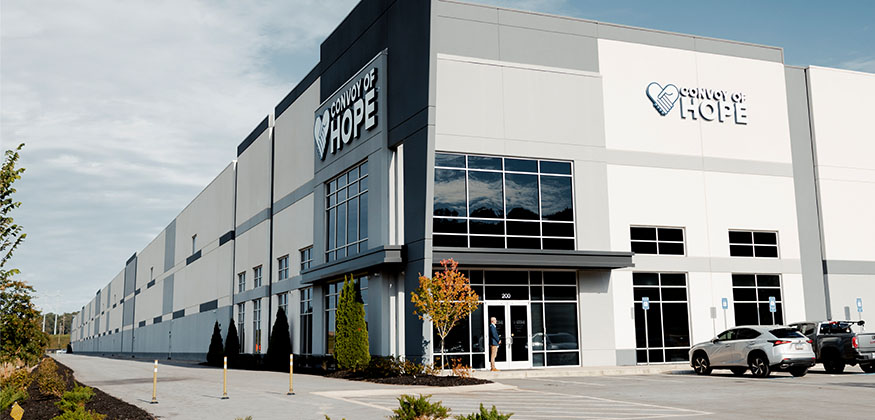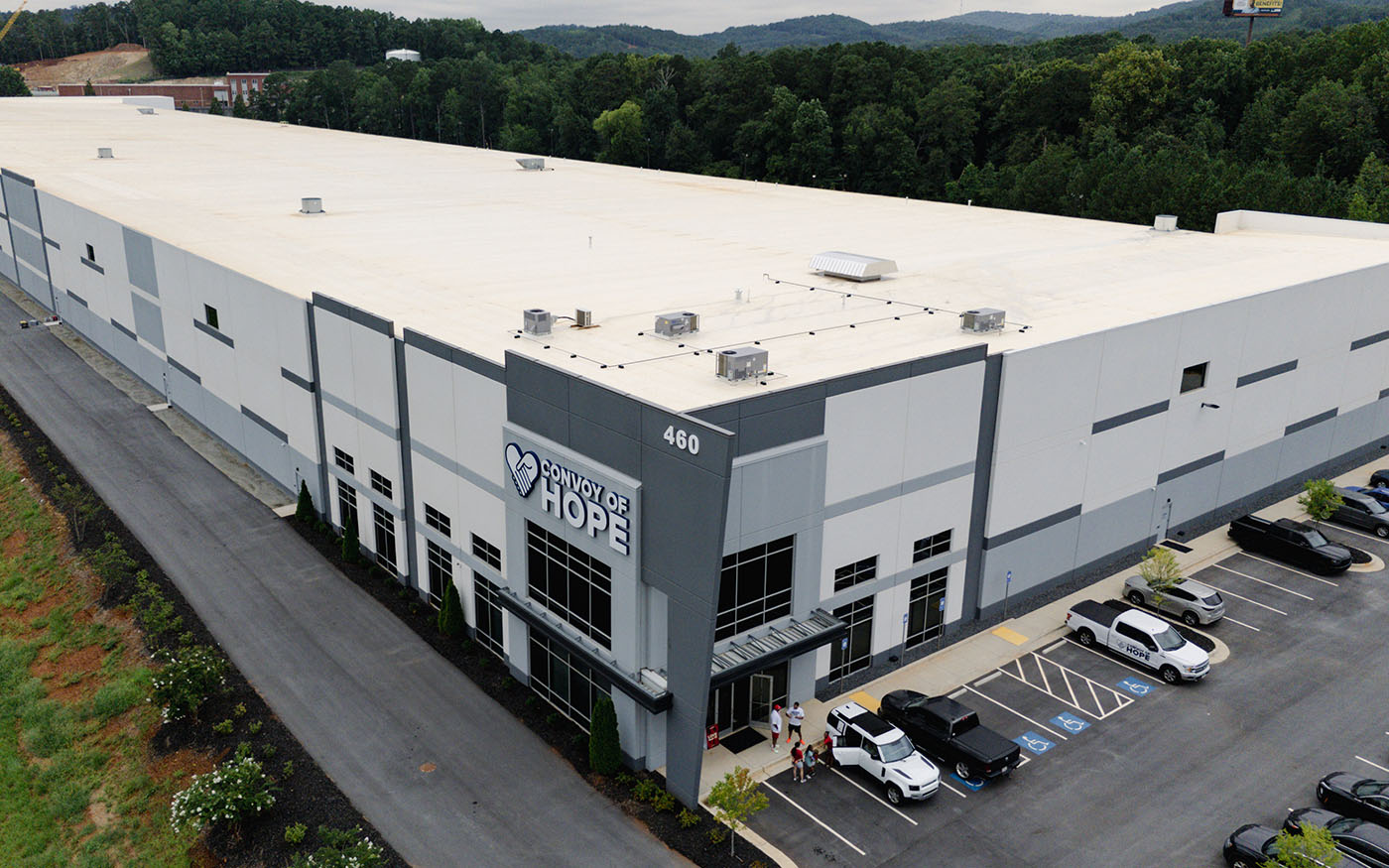
Convoy of Hope Dedicates Southeast Distribution Center
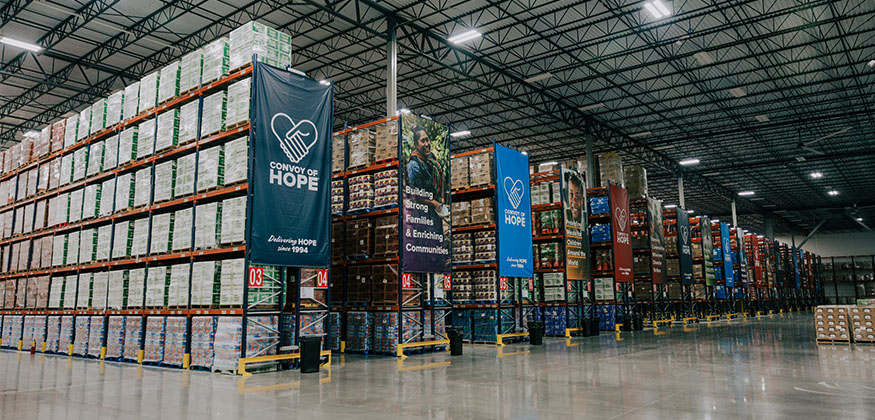
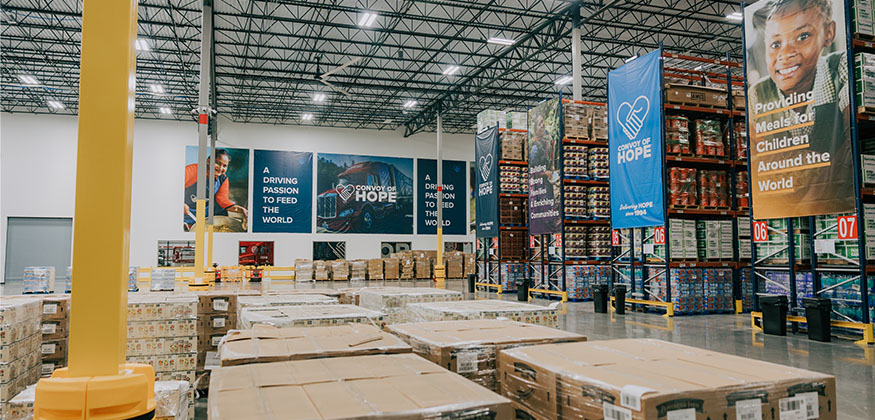
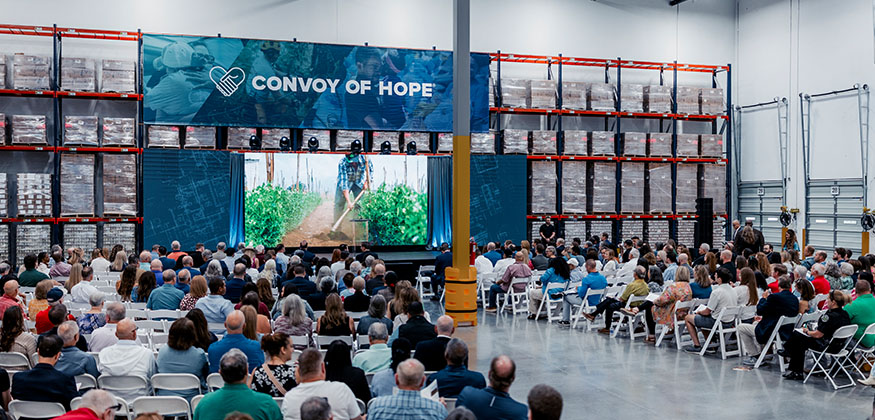
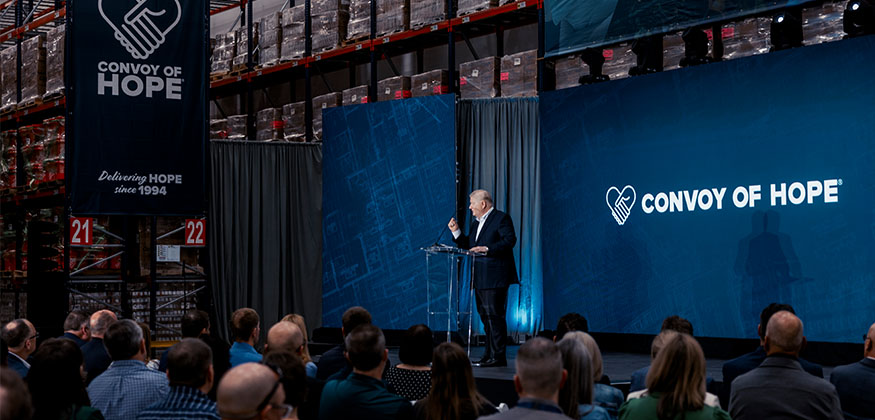
More than 300 people attended the Aug. 28 dedication, which featured Convoy of Hope President Hal Donaldson, Chick-fil-A CMO Jon Bridges, The Home Depot Foundation CFO and COO John Dennison, and North Point Ministries’ Sandra Stanley. The global, faith-based organization’s 125,000-square-foot regional distribution center near Atlanta is already fully stocked and operational. The closer proximity to the region, following natural disasters, is estimated to cut the response time to some locations in half.
“Establishing regional distribution centers across the country is a forward-thinking way Convoy of Hope is expanding its capacity to serve and ensures we can very quickly respond when disasters strike,” said Donaldson. “By positioning supplies in regions that are increasingly vulnerable, we can reach families and individuals more quickly and effectively in their greatest time of need. We are grateful for the opportunity to deepen our partnerships with local organizations across the Southeast as we work together to bring timely help and hope.”
The new Regional Distribution Center East has a fleet of disaster response vehicles ready to deploy emergency supplies, including shelf-stable food, water, paper goods, and hygiene items. This will allow Convoy of Hope to more quickly deliver critical supplies to those impacted by disasters in the Southeast. These supplies and equipment are vital to meeting the needs of survivors during hurricane season and in the immediate aftermath of strong storms. Because the Southeast region is particularly vulnerable to hurricanes, tornadoes, and flooding, it is a critical location for launching Convoy’s relief efforts.
Last year, Convoy of Hope, headquartered in Springfield, Missouri, responded to 99 disasters, including Hurricanes Helene and Milton, among others that impacted communities throughout the Southeast.
The new regional distribution center is economically efficient, maximizing funds for recovery. Pre-positioning supplies regionally reduces costly emergency transportation during disasters when logistics networks are strained and prices spike. Partnerships with local communities and churches that collect donations, as well as local vendors and suppliers, create reliable supply chains for stocking essential items. Just as important, local team members understand regional needs, cultural considerations, and logistical challenges. The long-term benefit is the reduction in wear and tear on equipment, extending the lifespan while reducing maintenance needs and ultimately lowering costs.
“Opening this new regional distribution center is just one more way that we are seeing our mission advance,” said Convoy of Hope Vice President of Public Engagement Ethan Forhetz. “Convoy of Hope brings help and hope to communities that need it most. Our new distribution center in Georgia is already helping us do that better than ever.”
“For more than a decade, we’ve partnered with Convoy of Hope in communities across the country, investing more than $6 million in the organization’s disaster response efforts,” stated Dennison. “As Convoy of Hope has grown, so has our partnership, so that we’re not only responding to disasters, but helping communities prepare for them as well."
Convoy of Hope has responded to more than 850 disasters worldwide since 1998. Convoy’s Disaster Services team is consistently among the first to respond and is known for its scalable response and distribution model, which utilizes well-positioned warehouses, a specialized disaster response fleet and a highly trained team of staff and volunteers to respond to disasters quickly and effectively. In the past year, Convoy of Hope has responded to the deadly flooding in Texas, the California wildfires, and the devastation caused by Hurricane Helene, among other disasters.
During times of natural and humanitarian disaster, Convoy of Hope responds with tangible aid and compassion. Not only does it distribute essential emergency supplies, but it often also provides long-term assistance to help people rebuild and recover.